Keynote Speakers
Keynote: From Virtual Prototyping to Digital Twin Engineering

Speakers Prof. Mark van den Brand, Eindhoven University of Technology (TU/e), Eindhoven, the Netherlands
Date Wednesday, 10 June
Abstract
High-tech systems are becoming increasingly complex and more difficult to design, manufacture and maintain. The Software Engineering and Technology cluster of the Eindhoven University of Technology develops methods to make accurate Digital Twins of these types of systems: virtual software versions that allow you to run simulations to predict, for example, how changes in the design affect performance, how control can be improved, or which part on which needs maintenance at the moment. Digital Twins are still mostly based on (existing) models that model the structure of the system and its behavior. By linking these models to measurement data that indicate how the system actually functions and combining this data with artificial intelligence, it is possible to create Digital Twins that continuously improve and adapt themselves.
Digital Twins have become popular and for many applications, Digital Twins are engineered. The engineered Digital Twins are used to get insight in the behavior of the actual system. The actual system can be a physical system, but also a process, or a combination. Digital Twin solutions can be used to effectively test what-if scenarios without the need to perform expensive experiments in the actual system. A Digital Twin may have an automatic feedback loop to the actual system, but it is not strictly necessary.
The engineering of Digital Twins involves a combination of data science, software engineering and, maybe most important, domain knowledge. The combination and appreciation of these diverse disciplines are required to build effective Digital Twins. It is a necessity, however, not sufficient. To keep the Digital Twin effective, it is also necessary to be aware of the evolution of the actual system, its environment, the infrastructure used to engineer the Digital Twin and finally the Digital Twin itself. This interplay is important but also challenging.
Short Bio
Mark van den Brand is a full professor of Software Engineering and Technology in the Department of Mathematics and Computer Science at Eindhoven University of Technology (TU/e). His current research activities are on model driven engineering, domain specific languages, meta-modeling, model management, digital twins, and automotive software engineering. His research is industry inspired; he works with most of the high-tech companies in the Eindhoven (The Netherlands) region. He was project leader of a research project on Digital Twins, the focus in this project on the orchestration and management of models involved in the Digital Twins. He was scientific director of the Digital Twin Lab (part of EAISI) of the Eindhoven University of Technology (TU/e). He was and is member of PCs on workshops and conferences related to software engineering, language engineering, rewriting, reverse engineering, and software maintenance. He initiated the special issues of Science of Computer Programming devoted to academic software development (Experimental Software and Toolkits), and since 2007 has been guest editor of six of these special issues. He was one of the people involved in the initiative for Engineering Digital Twins (EDT) online seminars and the EDTconf (co-located with Models). He is one of the organizers of the Wolfrath workshops on Digital Twin Engineering.
Keynote: Bootstrapping Coding Agents: The Specification Is the Program
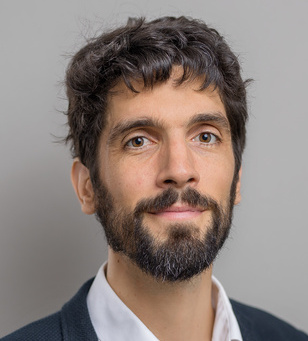
Speakers Prof. Martin Monperrus, KTH Royal Institute of Technology, Stockholm, Sweden
Date Thursday, 11 June
Abstract
A coding agent can bootstrap itself. Starting from a 926-word natural-language specification and a
first implementation produced by Claude Code, a newly generated agent re-implements that same
specification from and passes the same test suite. This reproduces, in the domain of AI coding
agents, the classical bootstrap sequence from compiler construction and the meta-circular property
from Lisp. The practical implication is direct: the specification, not the implementation, becomes
the stable artifact of record. Improving an agent means improving its specification; the
implementation is regenerable at any time. Beyond this result, the talk discusses coding agents more
broadly — how they are structured, where they fail, and how agent capability should be measured and
improved.
Paper: https://arxiv.org/pdf/2603.17399
Short Bio
Martin Monperrus is Professor of Software Technology at KTH Royal Institute of Technology and IEEE
Fellow. His research lies in the field of software engineering. He received a Ph.D. from the
University of Rennes.
Homepage: https://www.monperrus.net/martin/